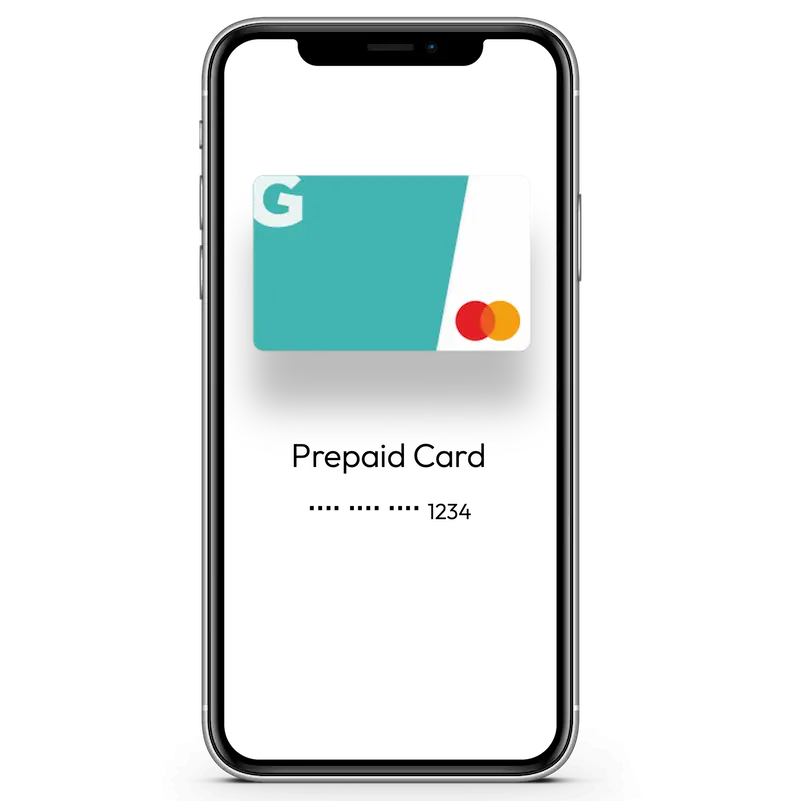
Getsby Prepaid Mastercard

A ‘no credit check’ prepaid Mastercard means you’re spending your own loaded funds, not borrowing money — but you may still need to verify your identity to activate the card and unlock features. Getsby offers a prepaid Mastercard you can top up online and use straight away for online purchases and subscriptions, without applying for credit. With Getsby, you don’t need a bank account to start — you load funds first, then spend up to your available balance and any applicable card limits.
Is Getsby a Prepaid Mastercard with No Credit Check and No Bank Account
Yes. Getsby operates as a prepaid Mastercard that requires neither a credit application nor a traditional current account. Here’s what you need to know:
- No credit application: You load money first, so there’s no borrowing and no credit score review.
- No overdraft: You can only spend what you’ve topped up.
- Identity verification may be required: While there’s no credit check, you may need to confirm your identity to activate features and meet financial crime controls.
- Limits apply: All cards have top-up and spending limits set by the issuer and the Mastercard network.
A prepaid Mastercard is a payment card that uses money you load in advance; it isn’t a credit card and doesn’t let you borrow. You can use it anywhere Mastercard is accepted, online and in stores. The key difference from a traditional credit or debit card is that you’re spending your own balance, not a line of credit or funds directly from a bank account. Federal Reserve data shows that 6% of adults were unbanked in 2023. European figures differ, but the need is similar. People without access to a current account can still use prepaid cards for online subscriptions, travel bookings, and everyday purchases.
Getsby is designed for people who want Mastercard acceptance without a traditional credit application — you load funds first, then spend from your balance. You can compare Getsby prepaid cards to find the option that suits your spending needs.
What ‘No Credit Check’ Means (and What It Doesn’t)
Definition: No credit check — On a prepaid Mastercard, ‘no credit check’ means the issuer isn’t deciding whether to lend you money; you can only spend what you’ve loaded.
No credit check does not mean no verification — it means you’re not applying to borrow, but you may still need to confirm your identity to use the card fully. Most prepaid cards don’t require a credit score review because there’s no lending involved. You’re spending money you already own. That distinction matters because many people hear “no credit check” and assume no checks of any kind will take place. The reality is more nuanced.
| Type of Check | What It Is | Why It Happens | What You May Be Asked For |
|---|---|---|---|
| Type of CheckCredit check | What It IsAssessment of your borrowing risk by reviewing credit history | Why It HappensTo decide whether to approve a loan, credit card, or overdraft | What You May Be Asked ForCredit score, credit report, proof of income |
| Type of CheckIdentity verification (KYC/AML) | What It IsConfirmation that you are who you say you are | Why It HappensTo reduce fraud and meet financial crime controls | What You May Be Asked ForName, date of birth, address, identity document (passport or driving licence) |
Identity verification is separate from credit checks. Financial services providers, including prepaid card issuers, often need to verify your identity to activate certain features, protect your balance, and comply with anti-money laundering (AML) and Know Your Customer (KYC) regulations. Consumer guidance confirms that registering a prepaid card can be required to access features and protections.
You can be declined or have features restricted if your identity can’t be verified, even when no credit check is performed. Common reasons include mismatched address details, an expired identity document, or information that doesn’t match official records. If this happens, contact the issuer’s support team. Most verification issues can be resolved quickly by providing updated or alternative documentation. To understand how Getsby protects you, you can review the security measures in place.
Do You Need a Bank Account to Use Getsby
No. You don’t need a bank account to spend with a prepaid Mastercard — you top up your card balance and pay from that balance. Prepaid cards are not linked to a traditional current account in the way that debit cards usually are. This makes them a practical option for people who don’t have a bank account or prefer to keep their spending separate from their main finances.
Here are three common ways people use prepaid cards without a bank account:
- Subscriptions: Netflix, Spotify, and other services accept prepaid Mastercard as long as you have sufficient balance at renewal time.
- Online shopping: Buy from retailers worldwide without sharing your bank details.
- Travel spending: Use your card abroad wherever Mastercard is accepted, subject to your balance and any applicable foreign exchange fees.
Definition: Authorisation hold — An authorisation hold is a temporary amount a merchant reserves on your card balance until the final charge is completed or released.
Refunds typically go back to your card balance, not to a bank account. The timing depends on the merchant’s processing system. Some refunds appear within 3 to 5 business days; others can take longer. If a refund doesn’t appear after 10 business days, contact the merchant first. They can confirm whether the refund was issued and provide a transaction reference for follow-up with the card issuer if needed.
Authorisation holds can cause confusion. Hotels, car hire companies, and petrol pay-at-pump terminals often place a hold that exceeds the final transaction amount. The hold secures the payment until the merchant processes the actual charge. Once the merchant finalises the transaction, the excess hold is released — but the release timing varies. To avoid declines, check your available balance (not just your current balance) before making a booking. Keep a buffer above the estimated transaction amount.
| Use Case | Works Well | Watch Out For |
|---|---|---|
| Use CaseSubscriptions (streaming, software) | Works WellYes, if balance covers renewal | Watch Out ForPrice changes or trial-to-paid upgrades |
| Use CaseHotels and car hire | Works WellYes, with sufficient buffer | Watch Out ForHolds often exceed the booking amount |
| Use CasePetrol pay-at-pump | Works WellSometimes | Watch Out ForPumps place holds; may not work if balance is low |
To see why cards get declined even when there’s money on them, review common causes and fixes.
Eligibility: Who Can Get a Getsby Prepaid Mastercard
Eligibility for a prepaid Mastercard is usually about identity and residency — not your credit score. Here’s what you’ll typically need:
- Meet the minimum age requirement shown during sign-up (often 16 or 18, depending on the card type).
- Be a EU/UK resident or confirm your location during registration.
- Provide basic personal details: name, date of birth, address.
- Submit an identity document if required to activate certain features or higher limits.
Definition: Identity verification — Identity verification is the process of confirming you are who you say you are, to reduce fraud and meet financial crime controls.
Consumer guidance notes that registering a prepaid card can be important to access features and protections. Getsby may request verification during sign-up or when you reach certain thresholds. Why we ask for this: verification protects your balance, prevents unauthorised use, and helps meet regulatory requirements.
| Requirement | What You May Need | If You Don’t Have It |
|---|---|---|
| RequirementAge confirmation | What You May NeedDate of birth matching official records | If You Don’t Have ItYou won’t be able to proceed if you’re under the minimum age |
| RequirementResidency | What You May NeedEU/UK address or proof of location | If You Don’t Have ItSome cards are only available in certain regions; check during sign-up |
| RequirementIdentity document | What You May NeedPassport, driving licence, national ID card, or residence permit | If You Don’t Have ItContact support to discuss alternative verification methods |
Common reasons you may not pass verification include a mismatched address (your details don’t match what’s on file with credit reference agencies or official databases), an expired or unclear identity document, or a name that differs from your official records (for example, a recent name change after marriage). If you’re declined, follow the in-app prompts or contact the Getsby help centre for guidance.
Instant Top Up Online (2025): How to Load Your Getsby Card
An instant top up means your prepaid balance updates quickly so you can spend immediately — but some payments may be pending while security checks complete. Here’s how to load your card:
- Log in to your Getsby account or app.
- Choose the card you want to top up.
- Enter the amount you wish to add.
- Select your payment method (debit card, bank transfer, or other supported options).
- Confirm the transaction and wait for the balance to update.
- Check your available balance before spending.
Definition: Top up — A top up is when you add money to a prepaid card so you can spend from that balance.
Timing outcomes vary. Most top ups process instantly, meaning your balance updates within seconds and you can spend straight away. Some top ups show as pending if the system flags the transaction for extra security checks. This can happen if you’re topping up from a new payment method, adding a large amount, or the payment details don’t match your account information. Failed top ups occur when the payment is declined due to insufficient funds, incorrect card details, or restrictions set by your bank or card issuer.
Research shows that consumers prefer faster payments, which is why instant top ups matter. Best practices include starting with a small amount the first time you use a new payment method, keeping your details consistent across accounts, and using 3D Secure authentication when prompted. To understand what 3D Secure is, you can review how it protects online payments.
| Status | What It Means | What to Do | Typical Resolution Time |
|---|---|---|---|
| StatusInstant | What It MeansBalance updated and available immediately | What to DoStart spending | Typical Resolution TimeSeconds |
| StatusPending | What It MeansPayment received but security checks in progress | What to DoWait; check back in 10–30 minutes | Typical Resolution Time10 minutes to 24 hours |
| StatusFailed | What It MeansPayment declined or not processed | What to DoCheck payment details, try a different method, or contact support | Typical Resolution TimeImmediate (you’ll need to retry) |
For exact limits and fees, see the fees and limits comparison.
Getsby Limits & Fees: What to Expect (with a Clear Summary Table)
Card limits exist because of risk control, compliance requirements, and Mastercard network rules. The easiest way to compare a prepaid Mastercard is to look at three numbers: the top-up limit, the spending limit, and the total fees you’ll pay to use it. Getsby publishes these figures openly so you know what to expect before you start.
Definition: Card limit — A card limit is the maximum amount you can load, spend, or withdraw within a set period.
Types of limits include:
- Top-up limits: How much you can add to your card per day or per month.
- Spending limits: The maximum amount you can spend in a single transaction or over a period.
- Transaction limits: Some merchants or payment types have their own caps.
- Merchant category restrictions: Certain high-risk categories (gambling, cash advances) may be blocked or require extra verification.
Limits can differ by card type or verification level. Getsby offers multiple card options, each with its own fee structure and limit profile. If you’ve completed identity verification, you may unlock higher limits. If you haven’t, you’ll be subject to lower caps until you verify. Don’t assume one fixed limit applies to everyone.
CFPB prepaid protections require clear fee disclosures and upfront transparency. Getsby follows these principles by publishing a comparison table that’s easy to scan. Check compare Getsby card limits for the most up-to-date figures.
| Card Type | Issuance Fee | Monthly Fee | Dormancy Fee (after card expiry) | Top-Up Fee | Daily Spending Limit | Daily Top-Up Limit | FX Fee | Refunds |
|---|---|---|---|---|---|---|---|---|
| Card TypeVirtual Green Card | Issuance Fee€3.99 + 3.0% | Monthly Fee€0.99 | Dormancy Fee (after card expiry)N/A | Top-Up Fee3.0%, Min. €2.99 | Daily Spending Limit€9,000 | Daily Top-Up Limit€18,000 | FX Fee2.0% | RefundsBack to card balance |
| Card TypeVirtual Black Card | Issuance Fee€2.99 + 3.0% | Monthly FeeN/A | Dormancy Fee (after card expiry)€2.99 | Top-Up FeeN/A | Daily Spending Limit€500 | Daily Top-Up Limit€500 | FX Fee2.0% | RefundsBack to card balance |
Last updated: January 2025. See Getsby comparison page for current figures.
Fees at a high level: issuance fee covers the cost of setting up your card. Top-up fees apply when you add funds. Foreign exchange (FX) fees apply when you spend in a currency other than pounds sterling. Inactivity fees may apply if you don’t use the card for an extended period (check the terms for your specific card type). Refunds go back to your card balance, not to a bank account.
Prepaid vs Debit vs Credit: Which One Is Right for You
If you want to avoid borrowing and avoid a credit application, a prepaid Mastercard is usually the simplest option: load money first, then spend. Here’s how the three main card types compare:
| Card Type | Needs a Bank Account? | Credit Check? | Can You Go Into Debt? | Best For |
|---|---|---|---|---|
| Card TypePrepaid | Needs a Bank Account?No | Credit Check?No | Can You Go Into Debt?No (spend loaded funds only) | Best ForBudgeting, online subscriptions, people without bank accounts |
| Card TypeDebit | Needs a Bank Account?Yes (usually linked to a current account) | Credit Check?Sometimes (for account opening) | Can You Go Into Debt?No (unless you have an overdraft) | Best ForEveryday spending, direct access to your current account |
| Card TypeCredit | Needs a Bank Account?Not required, but you need to repay | Credit Check?Yes | Can You Go Into Debt?Yes (you’re borrowing up to a limit) | Best ForBuilding credit history, larger purchases, rewards programmes |
Definition: Credit check — A credit check is when a lender reviews your credit history to decide whether to approve borrowing and on what terms.
Prepaid cards don’t let you borrow, so there’s no credit line and no monthly repayment requirement. You can only spend what you’ve loaded. This makes them a good fit for budgeting because there’s no risk of overspending into debt. Debit cards are typically tied to a bank account. You may need to pass account opening checks, and you’ll need to maintain a relationship with the bank. Credit cards involve borrowing. You’re approved for a credit limit based on your creditworthiness, and you must repay the balance by the due date to avoid interest charges.
Be explicit: prepaid cards typically do not build credit. There’s no borrowing, so nothing is reported to credit reference agencies. If building credit is your goal, you’ll need a product that reports repayments to the agencies (such as a credit card or credit-builder loan). To understand what is a debit card and how it differs from prepaid options, you can review the basics.
Federal Reserve data shows that 6% of adults were unbanked in 2023, which is why prepaid cards remain an important option for people who need payment functionality without a traditional banking relationship.
Common Limitations (and How to Avoid Problems)
Most prepaid card declines are solvable: check your available balance (not just your current balance) and make sure your billing details match. Here are the top seven reasons a prepaid Mastercard may be declined:
- Insufficient available balance: Your current balance looks fine, but a pending hold has reduced your available funds. Check the available balance before spending.
- Merchant authorisation hold: Hotels, car hire, and petrol stations place holds that exceed the purchase amount. Keep a buffer to cover the hold.
- Billing address mismatch: The address you enter at checkout doesn’t match the one on file. Use consistent details across all payments.
- Card limit reached: You’ve hit your daily or monthly spending limit. Wait for the limit to reset or top up if you’re near the top-up cap.
- Merchant category restriction: Some merchants (gambling, cash advances) may be blocked. Check your card’s terms for restrictions.
- 3D Secure authentication failed: You didn’t complete the security check. Retry and follow the prompts carefully.
- Card expired or inactive: Your card has reached its expiry date or hasn’t been used for a long period. Check the expiry and contact support if needed.
Definition: Merchant decline — A decline happens when the payment can’t be authorised, often due to insufficient balance, a hold, or mismatched details.
Merchant holds are especially confusing at hotels and car hire locations. A hotel may place a hold for the full stay plus an additional buffer (for incidentals like room service). The hold secures the payment until you check out. Once the merchant finalises the charge, the excess hold is released — but the timing depends on the merchant’s system. It can take 3 to 7 days. Petrol pay-at-pump terminals place holds that may be higher than the fuel cost. If your available balance is low, the hold can cause a decline even if you have enough to cover the fuel itself.
Subscription renewals can fail if the price increases or your balance drops below the renewal amount. Set a reminder to check your balance before renewal dates. Keep a buffer of at least 10% above the expected charge to account for price changes or currency fluctuations. If a renewal fails, the service may suspend your account. You’ll need to top up and manually retry the payment.
International or online merchant rules: some merchants restrict prepaid cards, especially for high-value purchases or recurring payments. If a merchant declines your card, contact their support team to ask whether prepaid cards are accepted. Have a backup payment method ready (such as a debit card or PayPal) for merchants who don’t accept prepaid. To learn more about what is 3D Secure, review how it protects online transactions.
| Problem | Likely Cause | If You Don’t Have It |
|---|---|---|
| ProblemPayment declined at checkout | Likely CauseInsufficient available balance or billing address mismatch | Fastest FixCheck available balance and confirm billing details match your account |
| ProblemHotel hold blocking funds | Likely CauseMerchant placed a hold exceeding the booking amount | Fastest FixWait for the hold to release after checkout (3–7 days) or top up to free up balance |
| ProblemSubscription renewal failed | Likely CausePrice increased or balance too low at renewal time | Fastest FixTop up before the renewal date and set a reminder for future renewals |
To see why payments decline even when money is available, review detailed troubleshooting.
Frequent Asked Questions
Do Prepaid Mastercards Do a Credit Check
Most prepaid Mastercards do not require a credit check because you’re spending money you’ve loaded, not borrowing. You’re not applying for credit, so the issuer doesn’t need to review your credit score or credit history. That said, you may still be asked to verify your identity to activate the card and access features. Identity verification is separate from a credit check. It confirms you are who you say you are, to reduce fraud and meet financial crime controls. You can be declined or restricted if your identity can’t be verified, even when no credit check is performed.
Can I Get a Prepaid Mastercard with No Bank Account
Yes — a prepaid Mastercard can be used without a traditional bank account because it isn’t linked to a credit line. You add money first (a top up), then spend up to your available balance and any applicable limits. Prepaid cards are designed for people who don’t have a current account or prefer to keep their spending separate from their main finances. You can top up using a debit card, bank transfer, or other supported methods, and the balance is stored on the prepaid card itself. Refunds go back to the card balance, not to a bank account.
What Documents Do I Need to Get Started
You’ll usually need basic personal details, and in some cases an identity document to confirm your identity during activation. The exact requirements depend on the card type and the issuer’s policies. Getsby may request your name, date of birth, address, and an identity document (such as a passport or driving licence) if required. The verification process helps reduce fraud and meet financial crime controls. If you don’t have a specific document, contact support to discuss alternative verification methods. Follow the in-app prompts, and you’ll know exactly what’s needed before you start.
Can I Top Up Instantly Online
Many top ups are fast, but some can show as pending while security checks complete. Most top ups process within seconds, meaning your balance updates immediately and you can spend straight away. If a top up shows as pending, it usually means the system is performing extra security checks. This can happen if you’re using a new payment method, topping up a large amount, or the payment details don’t match your account information. Pending top ups typically resolve within 10 to 30 minutes, but some can take up to 24 hours. If a top up fails, the most common causes are incorrect details, insufficient funds, or restrictions on the payment method. Check your payment details and try again, or contact support for help.
What Happens If My Card Is Lost or Details Are Stolen
If you suspect fraud, act quickly: freeze the card (if available) and contact support to protect your balance. Most prepaid card accounts include a freeze or lock feature that stops new transactions while you resolve the issue. If your card details are stolen and unauthorised charges appear, report them to the issuer immediately. The sooner you report, the better your chances of recovering the funds. To see how Getsby protects you, review the security measures and fraud protection policies in place.
Will a Prepaid Mastercard Help Build My Credit Score
Typically, no — prepaid cards usually don’t build credit because there’s no borrowing and no credit reporting. Prepaid cards aren’t reported to credit reference agencies because you’re spending your own loaded funds, not taking on debt. If your goal is to build or improve your credit score, you’ll need a product that reports repayments to the agencies. Options include credit cards, credit-builder loans, or other borrowing products that demonstrate responsible repayment behaviour. Prepaid cards are useful for budgeting and online payments, but they won’t help you establish a credit history.
Why Did My Payment Get Declined Even Though I Have Money
A payment can be declined if a merchant places an authorisation hold or if the available balance is lower than the current balance. Your current balance shows the total funds on your card. Your available balance shows the amount you can actually spend right now, after accounting for any pending holds. If a merchant (such as a hotel or petrol station) places a hold, your available balance drops even though the final charge hasn’t been processed yet. Check the available balance before spending. Confirm your billing details match the address on file. If the decline persists, contact support for help. To understand why cards get declined, review common causes and fixes.
Conclusion
A prepaid Mastercard with no credit check and no bank account requirement gives you Mastercard acceptance without the need to borrow or open a traditional current account. Getsby makes it easy: load funds first, spend from your balance, and enjoy the flexibility of online payments, subscriptions, and worldwide acceptance. You may still need to verify your identity to unlock features, but there’s no credit application and no risk of overspending into debt.
If you want a prepaid Mastercard you can use online without applying for credit, compare Getsby card options and choose the one that matches your limits and fee preferences. Visit the Getsby help centre if you have questions about eligibility, top ups, or how to get started.